
Short answer: Rhinoplasty corrects the outward appearance of the nose, while septoplasty corrects a deviation of the wall that divides the nose in two. Septorhinoplasty is both in the same operation; it is usually chosen when the nose looks crooked from the outside or when there is both a cosmetic and a breathing concern. Which one is needed is decided after a consultation in which the inside of the nose is examined with an endoscope.
Three terms are often confused in nose surgery: rhinoplasty, septoplasty and septorhinoplasty. All three involve the nose, but they address different problems. Which one is needed depends on what the consultation finds, both in the outward appearance of the nose and in its internal structures.
What does rhinoplasty change?
Rhinoplasty reshapes the bone and cartilage framework that can be seen from the outside. Removing a hump, lifting or refining the tip, narrowing the nostrils and straightening a nose that looks crooked from the outside are all part of this operation. Details are on the rhinoplasty page.
What does septoplasty correct?
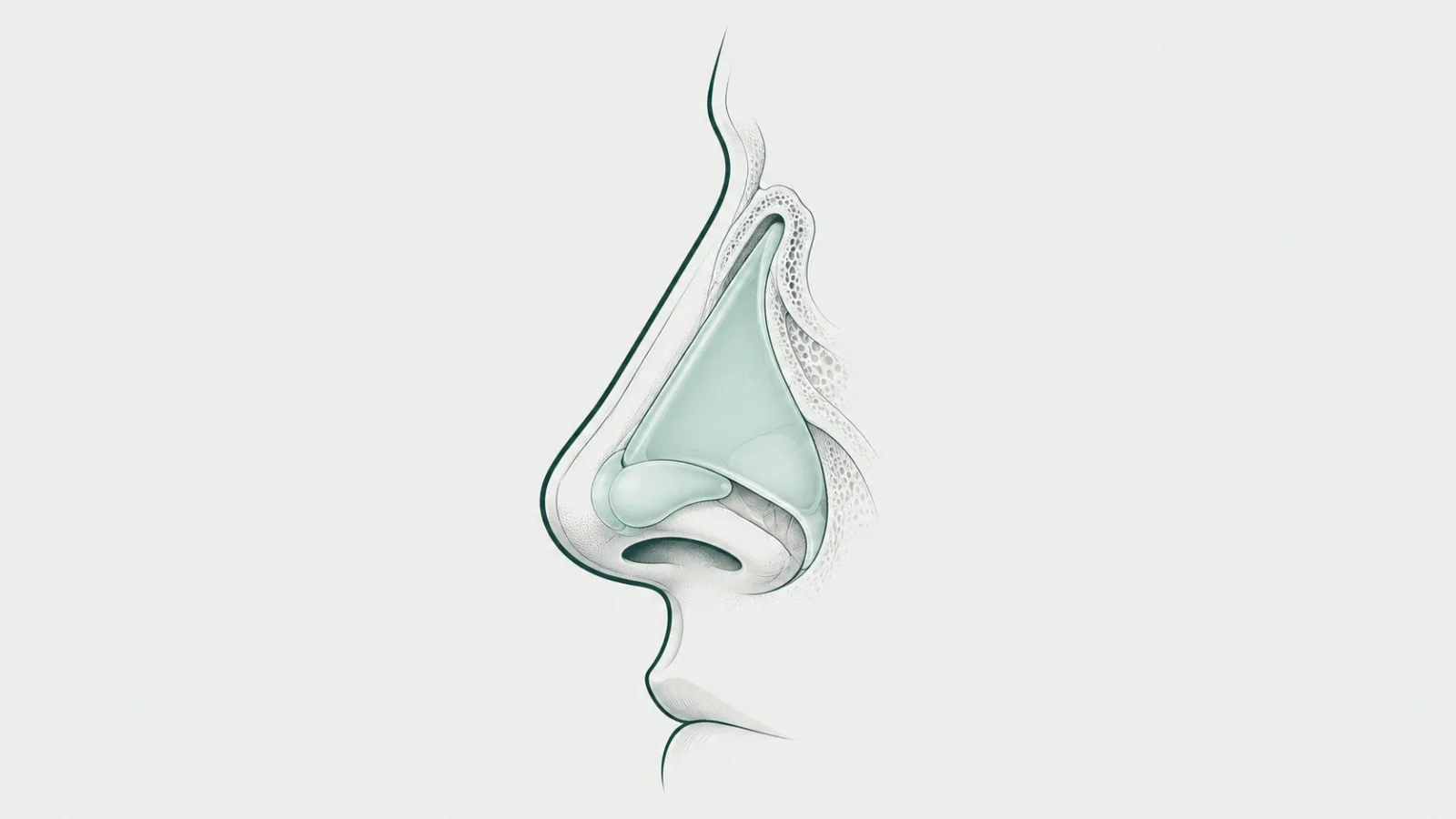
The septum is the wall of cartilage and bone that divides the nasal cavity into right and left sides. When this wall leans to one side, it is called a deviated septum. Septoplasty is the operation in which the deviated part is corrected from inside the nose; its aim is to open the airway, and it does not change the outward appearance.
A deviated septum is often accompanied by enlarged turbinates. In that case, turbinate reduction can be planned in the same operation.
Septorhinoplasty: two procedures in one operation
Septorhinoplasty means performing septoplasty and rhinoplasty in the same operation. This combined approach is usually considered in these situations:
- If the nose looks crooked from the outside: much of the outward deviation is often caused by the deviated septum. If only the external structure is worked on without correcting the septum, the deviation can become visible again.
- If there is both a cosmetic and a breathing concern: instead of two operations, both can be addressed with one anaesthetic and one recovery period.
- If cartilage is needed to support the tip: the septum is the most common source of support cartilage in rhinoplasty.
How is it decided which one is needed?
The decision takes into account the person’s concern and the findings of the consultation. The outward structure of the nose, skin thickness and facial proportions are assessed, and the inside of the nose is examined with an endoscope. This examination shows any deviation of the septum, the size of the turbinates and the narrow area on the inner side of the nostril (the internal nasal valve). If sinus disease is suspected, a CT scan may be requested.
Even if the request is purely cosmetic, assessing the inside of the nose is important. Changes to the outward structure can affect the airway; a deviated septum missed at the consultation can turn into a breathing problem after surgery.
Differences in the process
- Anaesthesia: rhinoplasty and septorhinoplasty are usually done under general anaesthesia. Septoplasty is also mostly done under general anaesthesia.
- Duration: adding septum and turbinate surgery makes the operation longer.
- External splint: septoplasty, which does not work on the external structure, needs no external splint; in rhinoplasty and septorhinoplasty it is usually removed at the end of the first week.
- Packing and internal splints: whether they are used, and for how long, is decided according to the surgical plan.
- Recovery: no visible swelling or bruising is expected after septoplasty. After rhinoplasty, most of the swelling goes down in the first months and the final shape is assessed around month 12.
Age and timing
For cosmetic rhinoplasty, we wait until the nose has finished developing and the person is 18 or older. When a deviated septum clearly makes breathing difficult, however, septoplasty can be considered at a younger age after growth has been assessed.
Related articles
- How to tell if your septum is deviated: symptoms and examination
- What is assessed at a rhinoplasty consultation?
Sources
- Ishii LE et al. Clinical Practice Guideline: Improving Nasal Form and Function after Rhinoplasty. Otolaryngology–Head and Neck Surgery, 2017.
- Han JK et al. Clinical Consensus Statement: Septoplasty with or without Inferior Turbinate Reduction. Otolaryngology–Head and Neck Surgery, 2015.
This article is for general information only. Diagnosis and treatment decisions are made by the doctor after a consultation; results of surgical procedures vary from person to person.
The information on this page is for general guidance only; diagnosis and treatment decisions are made by the doctor after a consultation. Results of surgical and interventional procedures vary from person to person.