
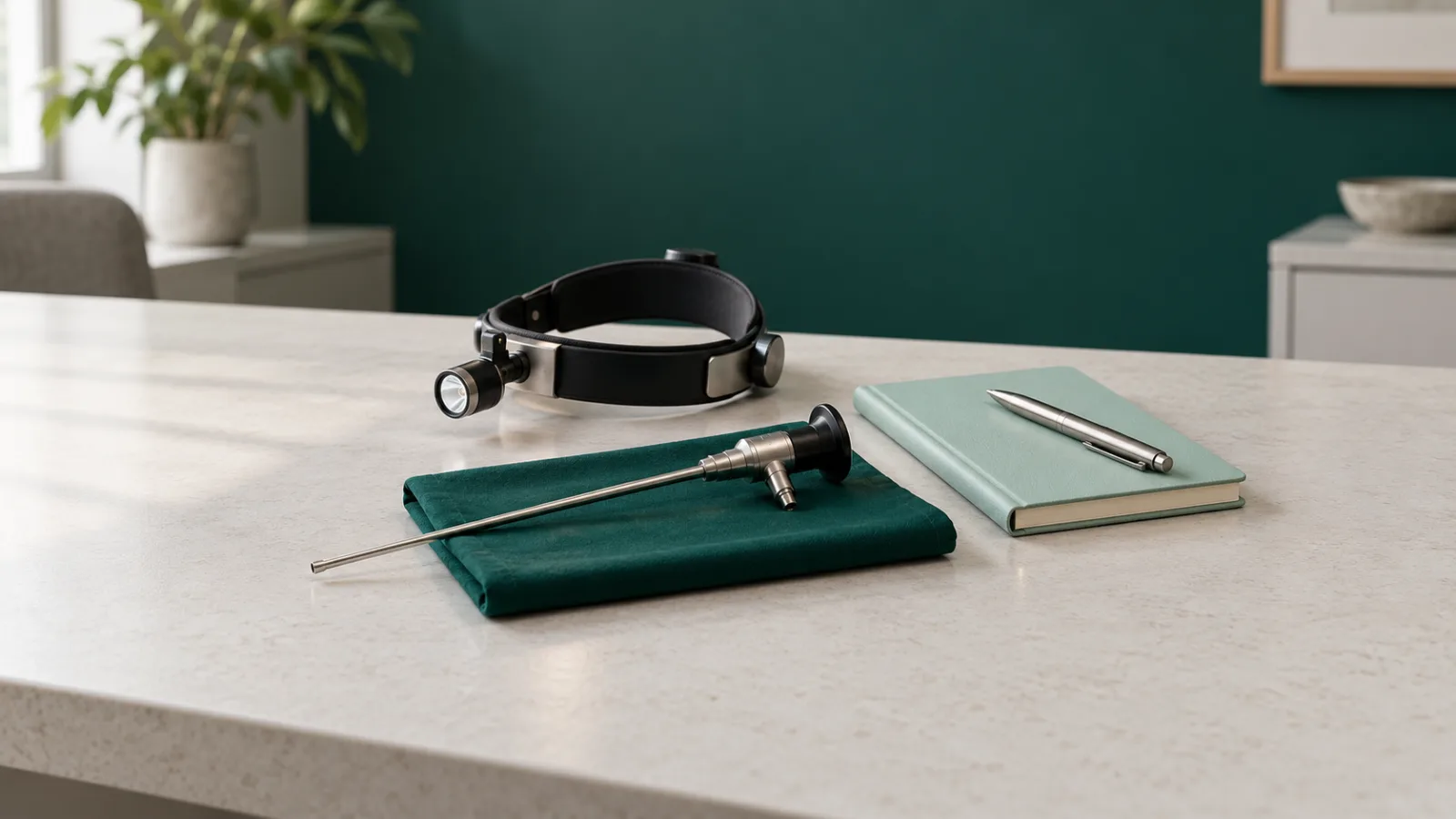
Short answer: At the first consultation before rhinoplasty, your expectations are discussed; the outward structure of the nose, skin thickness, cartilage support and facial proportions are assessed, and the inside of the nose is examined with an endoscope. You are asked about your general health, medicines, smoking and any previous nose surgery. The technique is decided according to these findings.
In rhinoplasty, planning begins at the first consultation. The aim of this meeting is to understand which aspect of the nose you would like to change and to assess together how far this is possible with the structure of your nose.
Talking about expectations
The consultation begins with what bothers you about your nose: a hump, a drooping or wide tip, asymmetry or a crooked nose. Clear and realistic expectations are the most important part of planning. For planning and records, and with your consent, photos may be taken from standard angles.
The outward structure of the nose
- The bridge: hump, width and straightness
- The tip: height, direction, width and symmetry
- The nostrils and the sides of the nose
- Deviations and asymmetries visible from the outside
Skin thickness and cartilage support
Skin thickness affects how long the result takes to become defined and how visible the fine details will be. Thin skin shows the underlying structure sooner and more clearly; in thick skin, swelling lasts longer. The strength of the tip cartilage is assessed by touch; if support is weak, cartilage support may be added to the plan.
Facial proportions
The nose is assessed together with the face as a whole. The angle between the forehead and the nose, the angle between the nose and the upper lip, the length of the face and the position of the chin are part of this assessment. For example, a receding chin can make the nose look larger than it is.
Assessing the inside of the nose
Even if the request is purely cosmetic, the inside of the nose is examined with an endoscope. This examination shows a deviated septum, enlarged turbinates and narrowing of the internal nasal valve. If there is a breathing problem, it can be addressed in the same operation.
Health history
- Chronic conditions and regular medicines
- Medicines and herbal supplements that can affect bleeding; the doctor decides whether they should be stopped before surgery
- Smoking
- Previous injuries to or operations on the nose
- Allergies and sinus problems
Choosing the technique
The open or closed technique, whether the piezo device is used to reshape the bone and whether cartilage support is needed are decided according to these findings. The technique is not the same for every nose; it is chosen according to each person’s structure and goal. The surgical process and recovery timeline are on the rhinoplasty page.
After the consultation
If surgery is decided on, blood tests and an anaesthetic assessment are planned. Instructions for before and after surgery are given in writing.
Related articles
- Why does the nasal tip take longer to become defined in thick skin?
- Rhinoplasty vs septorhinoplasty: what is the difference?
Sources
- Ishii LE et al. Clinical Practice Guideline: Improving Nasal Form and Function after Rhinoplasty. Otolaryngology–Head and Neck Surgery, 2017.
This article is for general information only. Diagnosis and treatment decisions are made by the doctor after a consultation; results of surgical procedures vary from person to person.
The information on this page is for general guidance only; diagnosis and treatment decisions are made by the doctor after a consultation. Results of surgical and interventional procedures vary from person to person.