
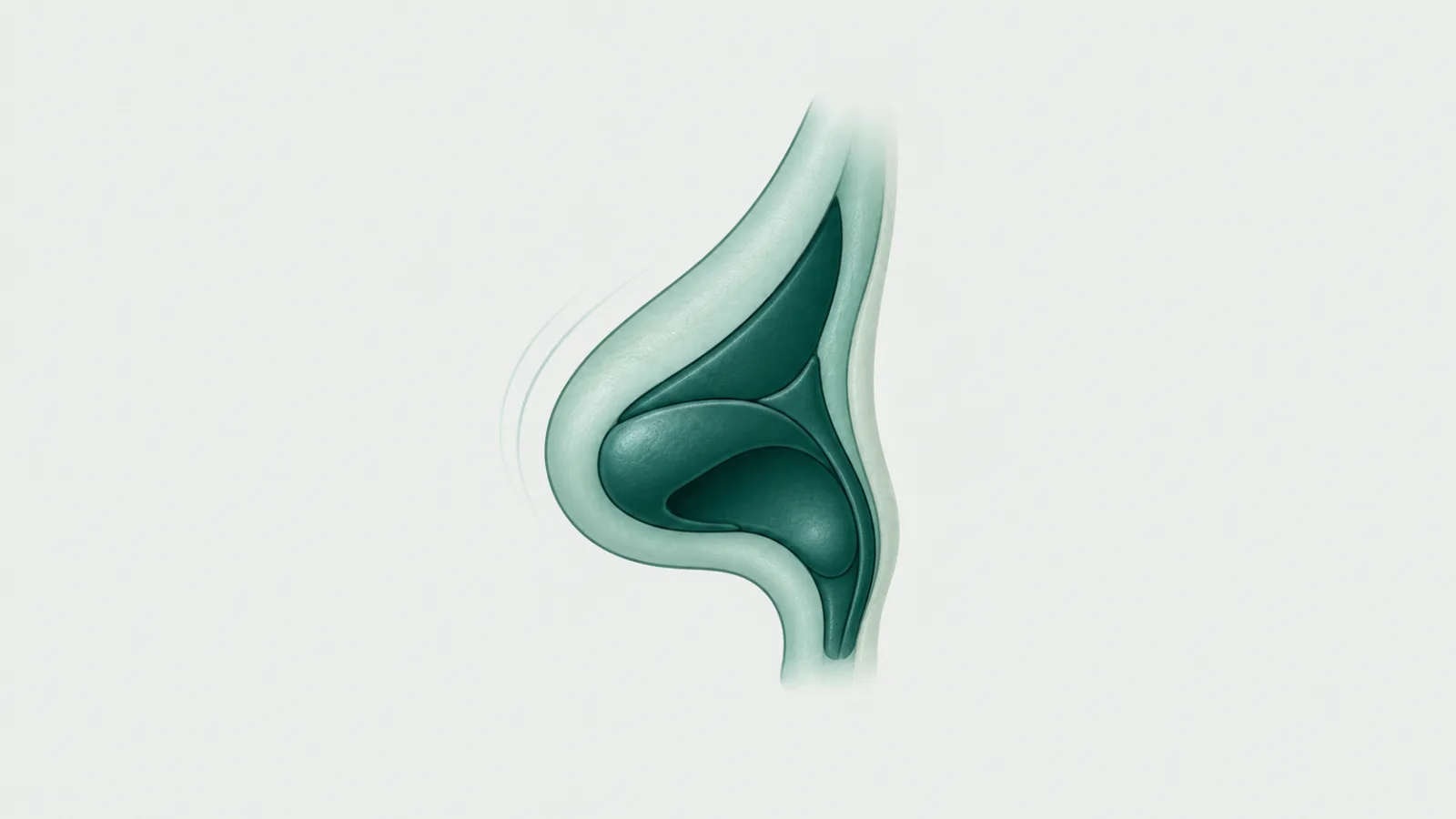
Short answer: In thick, oily skin, swelling after surgery lasts longer at the nasal tip and the skin takes longer to reflect the cartilage structure underneath. While the bridge becomes defined in the first months, the tip can take 12 months, and in some people longer, to become defined. That is why planning for thick skin relies on giving the tip firm cartilage support.
After rhinoplasty, swelling does not go down at the same pace in everyone. One of the most important factors is skin thickness. In thick, oily skin, the nasal tip can take considerably longer to reach its final shape than in a nose with thin skin.
Why does skin thickness matter?
The outward appearance of the nose is the combined result of the bone and cartilage framework and the skin and soft tissue that cover it. Thin skin closely follows the structure underneath; details look sharp, but small irregularities can also show. Thick skin covers the underlying structure; it hides small irregularities, but it also limits how defined the details of the tip can become.
Why does swelling last longest in the tip?
On the bridge, the skin over the bone and cartilage is relatively thin; swelling goes down earlier. At the tip, however, the skin is thicker, the oil glands are more numerous and fluid in the tissues is reabsorbed more slowly. That is why the tip is the last part of the nose to reach its final shape. In thick skin, this difference is even more marked.
Recovery timeline
- First weeks: bruising and marked swelling go down; even so, the nose looks full.
- Months 3 to 6: most of the swelling goes down; the bridge becomes defined.
- Month 12: the final shape is assessed at this point. In thick skin, the tip can take longer to become fully defined.
The detailed recovery timeline is on the rhinoplasty page.
How is thick skin planned for?
Thick skin does not shrink on its own over a reduced framework. That is why, rather than over-reducing the tip, the aim is to give it structure and strength with cartilage support. Planning for noses with thick skin and a wide tip is explained in detail on the ethnic rhinoplasty page. For cases where only the tip is corrected, see the tip rhinoplasty page.
During recovery
Check-ups follow how the swelling develops. The doctor decides whether measures to reduce it, such as taping, are needed. In thick skin it is expected for the tip to look full in the first months; the result is assessed once the swelling has completely gone down.
Related articles
- What is assessed at a rhinoplasty consultation?
- Why wait at least 12 months for revision rhinoplasty?
Sources
- Ishii LE et al. Clinical Practice Guideline: Improving Nasal Form and Function after Rhinoplasty. Otolaryngology–Head and Neck Surgery, 2017.
This article is for general information only. Diagnosis and treatment decisions are made by the doctor after a consultation; results of surgical procedures vary from person to person.
The information on this page is for general guidance only; diagnosis and treatment decisions are made by the doctor after a consultation. Results of surgical and interventional procedures vary from person to person.