
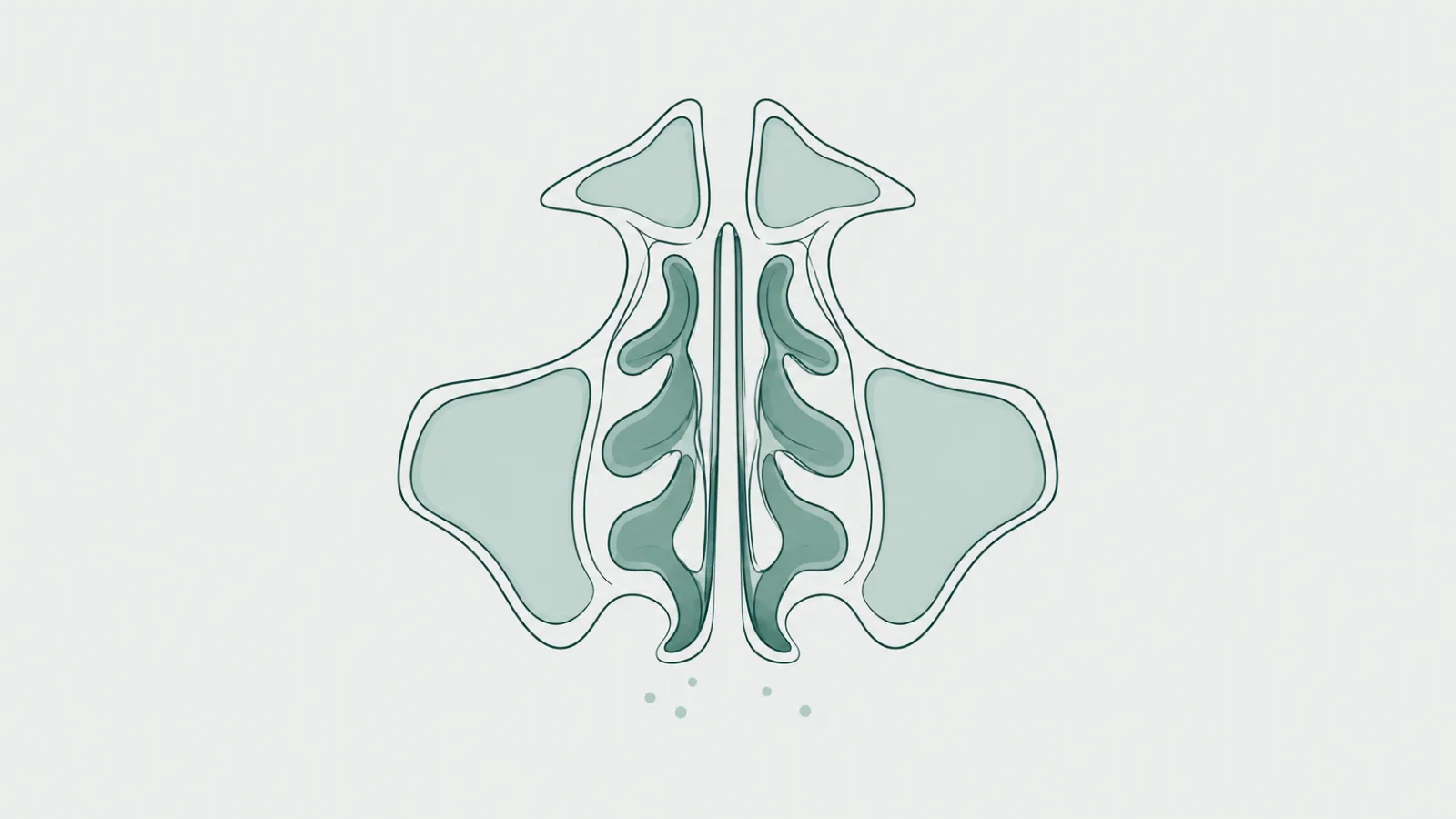
Short answer: Common causes of a persistently blocked nose are a deviated septum, enlarged turbinates, allergic rhinitis, sinusitis and nasal polyps; in children, enlarged adenoids are also common. Using decongestant sprays for more than a few days can also make the blockage worse. Because treatment depends on the cause, the source should be identified at an ear, nose and throat consultation.
A blocked nose is not a disease in itself, but a symptom shared by different causes. Blockage that lasts a few days during a cold usually clears on its own. When it lasts weeks or months and affects sleep and daily life, however, the underlying cause needs to be found.
Structural causes
Narrowing in the internal structure of the nose mechanically blocks the airflow. This kind of blockage is usually constant and often worse on one side.
- Deviated septum: a bend in the wall that divides the nose in two
- Turbinate hypertrophy: permanent enlargement of the turbinates on the side wall of the nose
- Internal nasal valve narrowing: the narrow area on the inner side of the nostril collapses inwards when breathing in
- Changes caused by previous injuries to the nose or earlier nose surgery
Allergic and inflammatory causes
- Allergic rhinitis: sneezing, itching, watery discharge and blockage triggered by factors such as pollen, house dust mites or animal hair
- Non-allergic rhinitis: discharge and blockage triggered by temperature changes, strong smells or smoke
- Sinusitis: inflammation of the sinuses; it may come with pressure in the face, thick discharge and a reduced sense of smell
- Nasal polyps: soft, benign growths that develop from the lining of the nose and sinuses; they often come with loss of smell
Blockage caused by medicines
Decongestant nasal sprays bring relief when used for a short time. If they are used for more than a few days, however, the blockage can come back more strongly as the effect wears off, and dependence on the spray can develop. This is called rhinitis medicamentosa. The spray needs to be stopped and the underlying cause treated; this process is planned under medical supervision.
Common causes in children
In children, the most common cause is enlarged adenoids; it may come with mouth breathing, snoring and pauses in breathing during sleep. With a foul-smelling discharge from one side only, a foreign object pushed into the nose should also be considered.
Clues that help tell them apart
- Blockage always on the same side, regardless of the season: suggests a structural cause.
- Blockage with sneezing, itching and watery discharge that gets worse in certain seasons: suggests allergy.
- A reduced sense of smell, thick discharge and pressure in the face: suggest sinusitis or polyps.
- Discharge from one side only, bloodstained or foul-smelling: a situation where a consultation should not be delayed.
These clues are only a guide; several causes often occur together. For example, in someone with a deviated septum, allergic rhinitis can also make the blockage worse.
What happens at the consultation?
After asking how long the problem has lasted and what it is like, the inside of the nose is examined with a light and an endoscope. This examination assesses the septum, turbinates, internal nasal valve and the back of the nose. If allergy is suspected, allergy tests may be requested; if sinus disease is suspected, a CT scan.
Treatment depends on the cause
For allergic and inflammatory causes, medical treatment and avoiding the allergen come first. For structural causes such as a deviated septum or permanently enlarged turbinates, medicines can ease the symptoms but do not correct the structure; septoplasty and turbinate reduction are then considered. For sinusitis and polyps that do not respond to medical treatment, endoscopic sinus surgery is considered.
Related articles
- How to tell if your septum is deviated: symptoms and examination
- Rhinoplasty vs septorhinoplasty: what is the difference?
Sources
- Seidman MD et al. Clinical Practice Guideline: Allergic Rhinitis. Otolaryngology–Head and Neck Surgery, 2015.
- Rosenfeld RM et al. Clinical Practice Guideline (Update): Adult Sinusitis. Otolaryngology–Head and Neck Surgery, 2015.
- Han JK et al. Clinical Consensus Statement: Septoplasty with or without Inferior Turbinate Reduction. Otolaryngology–Head and Neck Surgery, 2015.
This article is for general information only. Diagnosis and treatment decisions are made by the doctor after a consultation; results of surgical procedures vary from person to person.
The information on this page is for general guidance only; diagnosis and treatment decisions are made by the doctor after a consultation. Results of surgical and interventional procedures vary from person to person.